

monday.com Project Boards
vs
Department Boards


Choosing the Right Board Methodology Before You Build in monday․com


Table of Contents:
Choosing the Right Board Methodology Before You Build in monday․com
One of the most important decisions in monday․com is how work will be structured. Choosing the right board methodology is a change management decision that will impact adoption, reporting, scalability, and trust in the system long-term.
There is no single right answer here, as each team and culture is unique. But if teams skip this analysis step, they often end up rebuilding later.
This guide will help you intentionally choose the board structure that best supports how your organization works today, and how it needs to scale tomorrow
Methodology Option 1: Project Boards
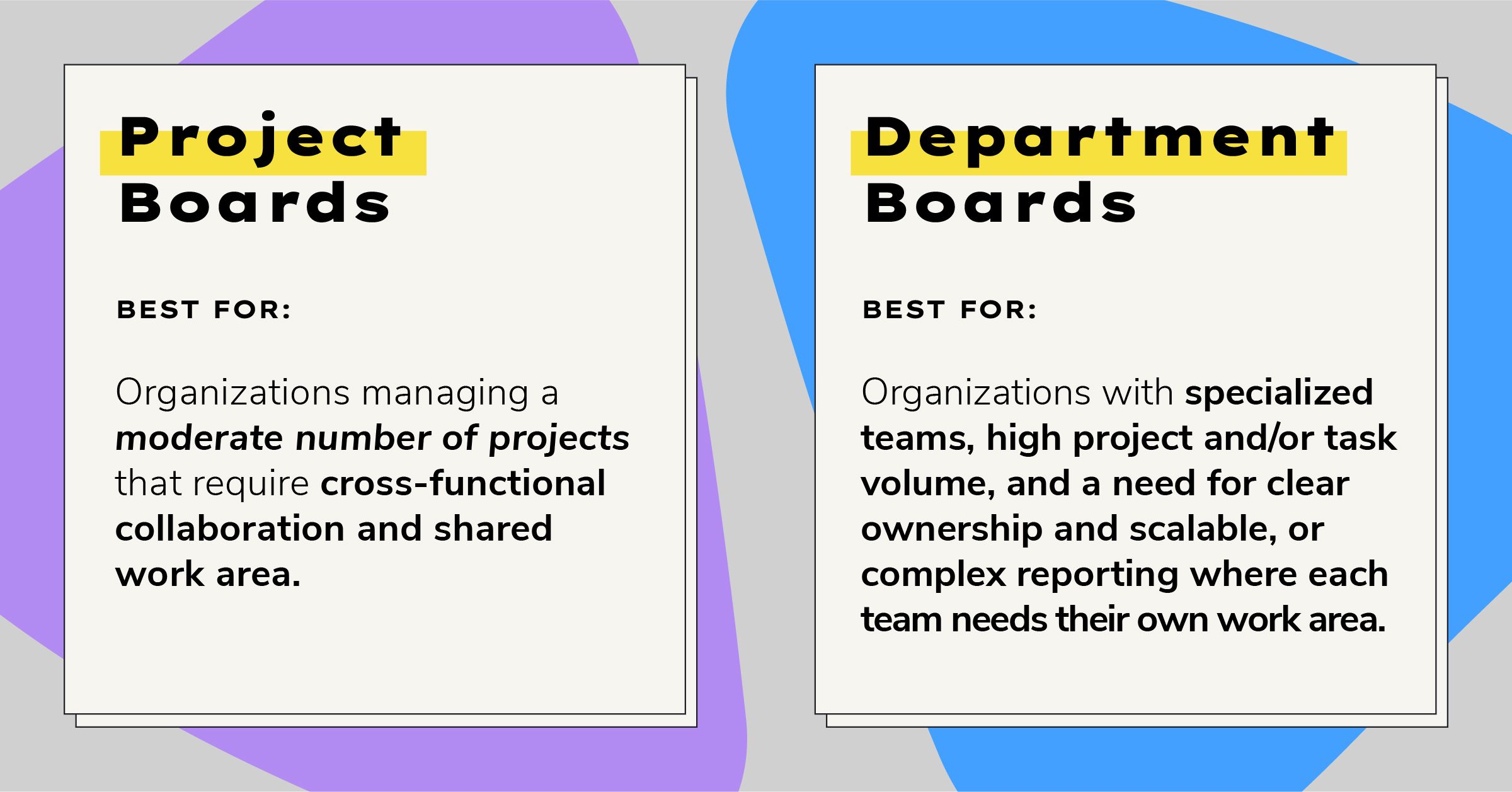
Best for: Organizations managing a moderate number of projects that require cross-functional collaboration and shared visibility

What This Looks Like
- Each project lives on its own board
- Tasks from all departments exist together on that board (all columns are shared by all departments)
- Where do you find your work? Individuals manage their workload through the My Work area.

Pros
- One board per project with interdepartmental visibility
- Rolls up to a Portfolio than can have specialized reporting on boards connected to that portfolio.
- Easy to see all tasks related to a specific project in one place
- My Work aggregates daily to-dos across all project boards

Cons
- Some teams dislike relying on My Work as their primary task view (it only has three customizable columns)
- Searching for the right board can be time-consuming
- All teams must share the same column structure (monday․com limits projects to ~200 columns)
- Teams often resist sharing boards due to competing workflows and views
- Board connections scale poorly
- Connection columns are capped (currently ~60 per column and ~200 per portfolio), so each new project can add complexity.
- One project can only be connected to one Portfolio, which can limit channel or reporting visibility.

Change Management Consideration
Project boards work best when teams are aligned on shared workflows, shared language, and shared ownership, and understand how to quickly find all project boards. Without that alignment, boards tend to fracture into workarounds and side systems.
Option 2: Departmental Boards
Best for: Organizations with specialized teams, high project and/or task volume, and a need for clear ownership and scalable reporting.
What This Looks Like
- Each department has one primary board which is the source of truth for that team
- All work for that team lives in one place
- There is one central request form and that form will send the proper tasks to the department boards based on request type and departmental data needed to begin the task.
Pros
- Each team has a board designed specifically for how they work
- Only the columns, statuses, and fields that team actually needs
- A true single source of truth per department
- No searching across dozens of project boards
- Easier long-term scalability for reporting and dashboards
Cons
- Requires more intentional upfront design and data structure
- Rollups and mirrored data must be structured correctly
- Slightly more complex initial build to ensure data lives in the right place and reports accurately, but highly scalable once the work is complete
Change Management Consideration
Departmental boards support clarity, autonomy, and ownership. When designed intentionally, teams gain confidence in their data and leaders gain reliable visibility without adding administrative burden to day-to-day work.

How to Decide: Ask These Questions First
Before building anything in monday․com, ask:
- Do teams need shared boards, or team-specific boards?
- Is work best understood by project, or by department execution?
- How many projects do we realistically run per year?
- How important is scalable, real-time reporting across teams?
- Do teams need visibility into incoming work before it’s ready to start?
👉👉 Your answers will point directly to the right methodology and prevent costly rebuilds later.

The Polished Geek Approach
At Polished Geek, we don’t start with the build, we start with how work flows. Through discovery and process mapping sessions, alongside co-creation, we help teams choose the methodology that aligns with their structure, goals, and growth plans before anything is built.
This ensures teams have a voice in the build of their environment and autonomy in execution, leadership gets trusted reporting, and adoption happens faster because it makes their work easier.
Choosing the right board methodology upfront can save months of rework and frustration later.
If you’re unsure which structure fits your team, a free strategy session can help you pressure-test your approach before you build so monday will scale with you, not against you.