

Change Management
with
SIPOC Diagrams


How to plan your change management using SIPOC Diagrams


Table of Contents:
When companies think about change management, they often jump straight to tools, training, or communication plans, but successful change will not start with tools, it will start with clarity.
Clarity about who is involved, what work is happening when, and how information or materials move from one team to the next.
That’s where the SIPOC diagrams come in (SIPOC means: Supplier, Input, Process, Output, Customer) and why they are most powerful after, or as a part of, discovery and process mapping. I often prefer to combine the process map and the SIPOC diagram into one visual with my clients.
Using SIPOC as a Refinement Tool
In many organizations, SIPOC diagrams are introduced early as a high-level overview. While useful, that approach can miss very helpful insights.
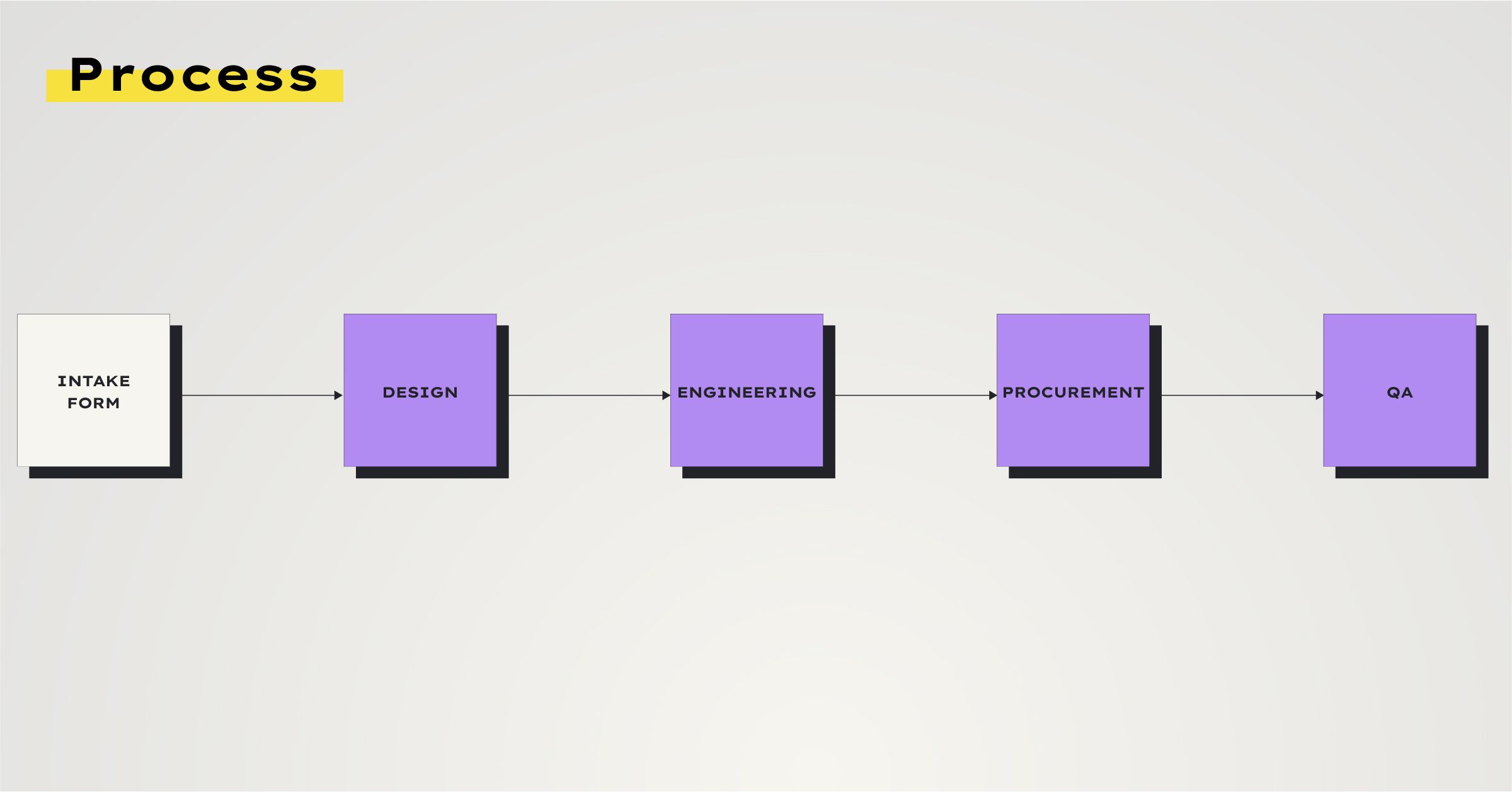
The best time to use SIPOC is after you’ve completed discovery and built a process map.
At that point, your team already understands:
- The major milestones in the process
- The departments involved
- Where all of the handoffs exist
At this point, you can use SIPOC to pressure-test each milestone in your process map.
Instead of (or in addition to) one SIPOC for the entire process, you would treat each milestone (ie: a process map box) in the process map as its own mini SIPOC.
That’s where insights (or confusion) will appear.
Turning Each Process Milestone Into a mini SIPOC
Take one milestone from your process map, just one box, and ask:
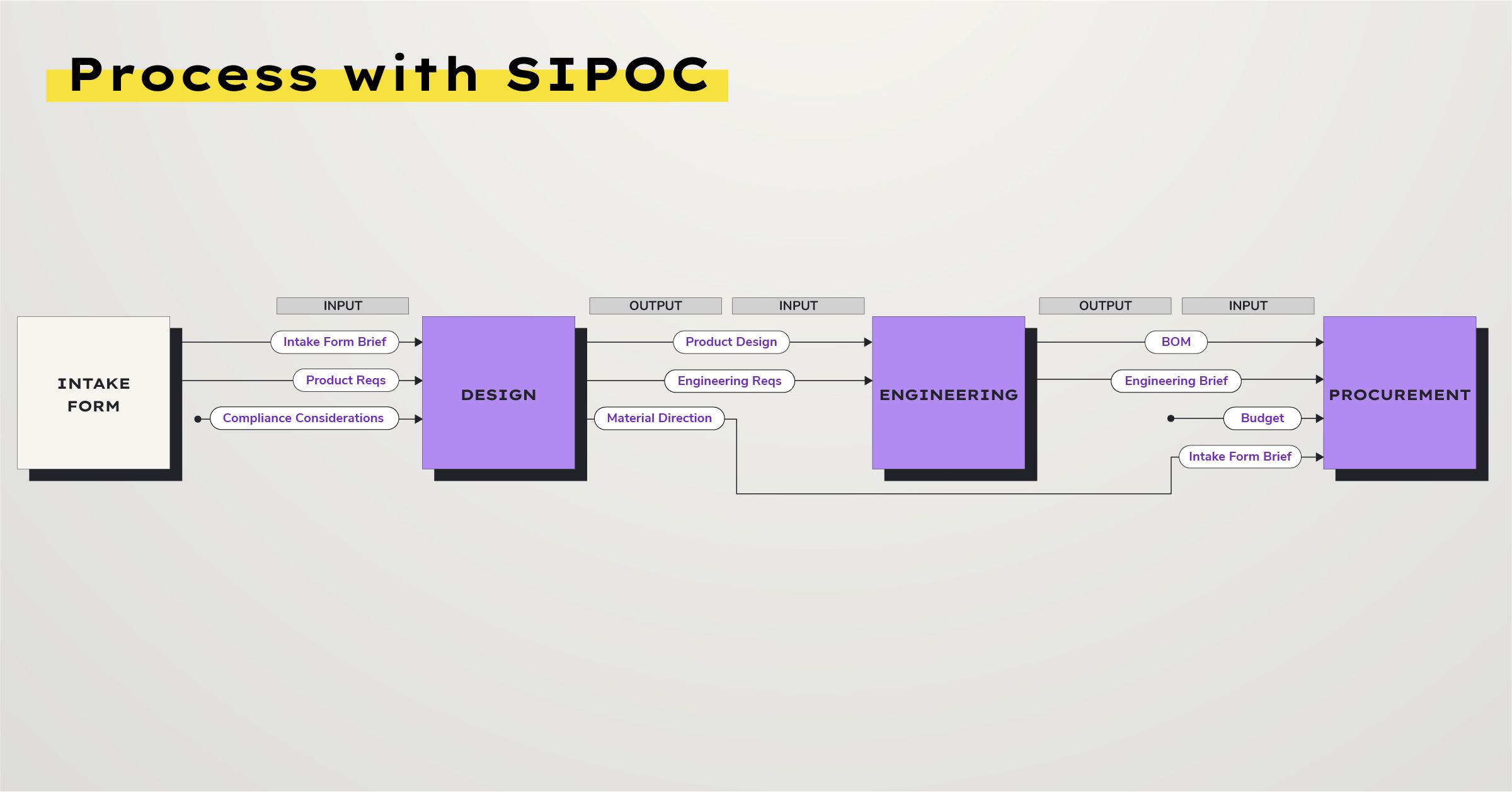
Supplier: Who Is the Supplier?
In most cases, the Supplier is the step or department immediately before the milestone you’re analyzing. This reframes internal teams as suppliers, which is a critical Lean mindset shift.
Inputs / Outputs: What are the Inputs and Outputs?
This is the most important part of this exercise. For every milestone, ask:
- What must this team receive to begin work? (Input - consider it the teams’ “Inbox”)
- What must they complete to hand work off successfully? (Output - aka, the team’s “Outbox”)
When teams struggle to answer these questions clearly, you’ve found a problem to dig deeper into.
This is where you will uncover:
Missing inputs
- Inconsistent formats
- Unclear ownership
- Rework and backtracking
- “We thought they did that” moments
In other words, this is where some of the process gaps may reveal themselves. These steps are also helpful when building these processes into monday․com. Knowing the inputs each department needs to get started and having a place for them to “turn in” their work when completed helps to build an environment in monday that will transform it into the source of truth that it needs to be to help your team excel.
Process: What Is the Micro Process?
The process inside a milestone is often far more detailed than what appears on the high-level map. For example, a box labeled “Send Email” might actually involve:*
- Opening an email tool
- Selecting the correct template
- Personalizing content
- Attaching documents
- Confirming approvals
- Sending and logging the action
These micro-steps are usually too detailed for an enterprise process map, but they’re the “process” part of these smaller SIPOC considerations.
*I’m not recommending to outline these micro processes, I’m simply highlighting that they exist.
Customer: Who Is the Customer?
The Customer is typically the next department or role downstream. Even if the end (actual) customer never sees this step, there is always an internal customer relying on the output.
This reinforces accountability and highlights how delays or defects ripple through the organization.
Why This Step Is Critical for Change Management
Change fails when people are asked to adopt new ways of working without clear expectations.
By defining SIPOC at the milestone level, you will:
- Create shared understanding across departments
- Remove ambiguity before change is introduced
- Reduce resistance caused by unclear handoffs
- Design change around how work actually happens
Instead of managing change emotionally, you manage it structurally, understanding that the company works as a system.
The Lean Six Sigma Connection
This approach is deeply rooted in Lean Six Sigma principles.
- Lean focuses on eliminating waste. SIPOC can expose delays, rework, and unnecessary variation at handoff points.
- Six Sigma focuses on reducing defects. Clear inputs and outputs reduce errors caused by assumptions and inconsistency.
- SIPOC reinforces the idea that every process has a customer, a supplier, and inputs and outputs, even when those customers and suppliers are internal.
Where Polished Geek Comes In
At Polished Geek, we help organizations uncover these hidden gaps, align teams, and design processes that work in the real world.
If your team is struggling with inefficiencies, unclear handoffs, or change initiatives that never seem to stick, we can help.
Contact Polished Geek for a free consultation to learn how we help teams save valuable time and money by building smarter, clearer, and more resilient processes.